

Buying physical gold is only the first step in protecting your wealth and once you own gold bars or bullion, the next important decision is determining how to store gold safely. Proper storage helps protect your investment from theft, accidental damage, natural disasters and unnecessary risks. Whether you are purchasing gold for long-term wealth preservation, portfolio diversification or international trade, choosing the right storage solution is just as important as buying genuine, high-purity bullion.
At East Gold, we understand that investors want confidence not only when purchasing gold but also when storing it. As a trusted partner in Uganda for gold sourcing, refining, bullion sales and export services, we guide our clients through every stage of ownership and this includes helping buyers understand the safest storage methods available for their investment.
Many first-time investors ask how to store gold safely because there is no single solution that suits everyone. The ideal storage method depends on the value of your holdings, how often you need access to them, your budget and the level of security you require. Someone purchasing a few gold coins may have different storage needs than an investor acquiring several kilograms of investment-grade bullion.
Learning how to store gold bullion safely also means understanding the balance between accessibility and security. While keeping gold close at hand may seem convenient, higher-value holdings often benefit from professional security measures that are specifically designed for precious metals. Professional vaults typically combine physical security, detailed record keeping, regular audits and insurance to reduce the risks associated with storing valuable assets. Industry best practices also emphasize strong physical security, accurate ownership records and appropriate insurance for bullion held in custody.
Compare ways on how to store gold safely, vault storage, safe deposit boxes and home storage solutions to find the safest way to protect your gold.
Table of Contents
Gold Storage Options Explained
Understanding the available storage solutions is the foundation of learning how to store gold safely. Every option offers advantages and limitations, making it important to compare security, cost, convenience and insurance before deciding where your bullion should be kept.
Gold Vault Storage

For investors holding substantial quantities of bullion, gold vault storage is widely regarded as one of the safest solutions available. Professional vault operators specialize in protecting precious metals using multiple layers of physical and electronic security.
Modern vault facilities typically include reinforced construction, biometric access controls, continuous surveillance cameras, motion detection systems, alarm monitoring and highly trained security personnel. These security measures are designed specifically for storing valuable assets such as gold bars and investment-grade bullion.
One of the biggest advantages of gold vault storage is the level of protection offered against theft. Professional facilities are built to security standards that most private homes cannot match. Many vault operators also perform regular audits to verify customer holdings and maintain accurate inventory records.
Another important factor is insurance. Many professional vault providers include comprehensive protection against theft, fire and certain other risks as part of their storage agreements and this significantly reduces the financial exposure faced by investors.
Although gold vault storage offers outstanding security, it is not always free. Storage fees are generally calculated according to the value or weight of the bullion stored. Investors may also need to arrange appointments if they wish to access their holdings. For many long-term investors, however, these costs are outweighed by the security and professional management provided. This option is particularly attractive for those holding significant amounts of investment gold.
Pros Of Gold Vault Storage
- Professional security is the primary benefit
- Investors gain access to insurance coverage
- Independent auditing
- Secure inventory management and facilities specifically designed for precious metals
Cons Of Gold Vault Storage
- Storage fees increase ownership costs over time
- Immediate physical access is usually limited to business hours or scheduled visits
- investors rely on a third-party provider to safeguard their assets
If you are considering professional gold vault storage, it is worth reviewing the London Bullion Market Association’s guidance on vaulting to better understand how recognized custodians store and protect bullion in secure facilities.
Safe Deposit Boxes
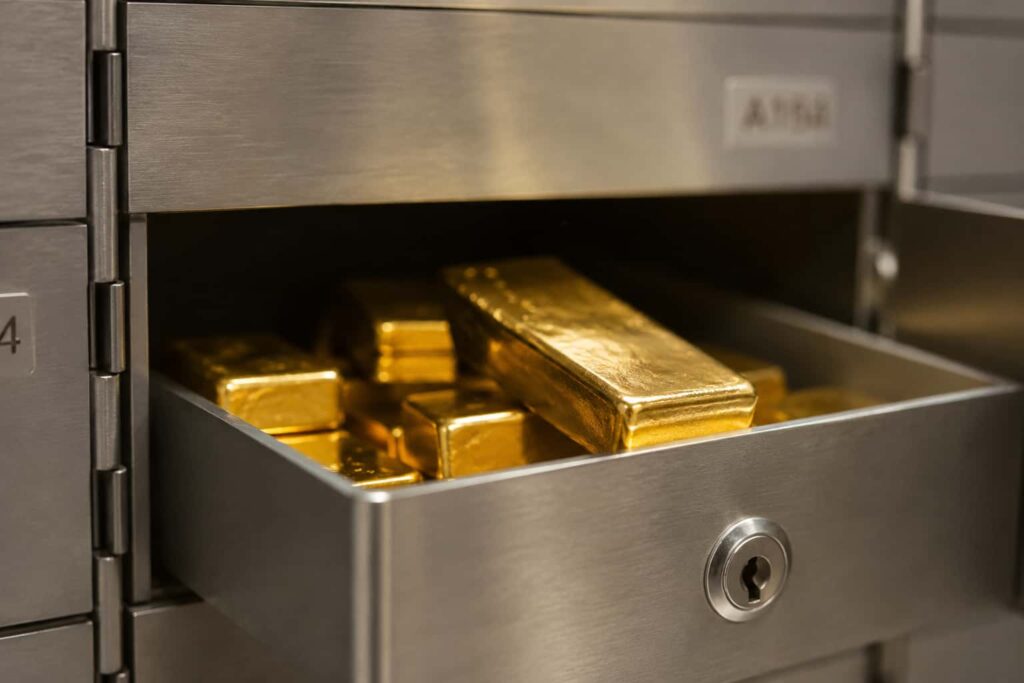
Another commonly discussed option when considering how to store gold safely is the use of safe deposit boxes offered by banks. A safe deposit box provides a secure location inside a bank vault where customers can store valuable items including important documents, jewelry and investment gold. Banks invest heavily in physical security, making these facilities more secure than keeping valuables in ordinary household storage.
Many investors choose safe deposit boxes because they provide a balance between affordability and enhanced protection. Rental costs are generally lower than professional bullion vault services making them attractive for individuals with modest holdings.
However, there are several factors investors should understand before relying on this option. In many countries, the contents of safe deposit boxes are not automatically insured by the bank. Separate insurance may need to be arranged to protect the value of the stored gold.
Access can also be limited to banking hours. During holidays, weekends or unexpected closures, retrieving your gold may not be possible. Depending on the bank’s policies, additional identification and documentation may also be required before access is granted.
Despite these limitations, safe deposit boxes remain a practical solution for investors seeking greater security than home storage without the higher costs associated with specialized bullion vault facilities.
Pros Of Safe Deposit Boxes
- Banks provide strong physical security
- Controlled access
- Relatively affordable rental costs
- They offer a secure environment for investors who do not require frequent access to their gold
Cons Of Safe Deposit Boxes
- Insurance is often not included automatically
- Access is restricted to bank operating hours
- Some institutions may place limitations on what can be stored inside the boxes
Insured Bullion Storage
As investors accumulate more valuable gold holdings, insurance becomes an increasingly important consideration. This is where insured bullion storage provides additional peace of mind.
With insured bullion storage, professional providers combine secure storage with insurance policies designed specifically for precious metals. These policies generally cover risks such as theft, fire, accidental damage and in some cases transportation between approved facilities.
Insurance can help protect the financial value of an investment should an unexpected event occur. Investors should always review policy details carefully to understand exactly what is covered, the coverage limits and any exclusions that may apply.
One of the major benefits of insured bullion storage is confidence. Instead of relying solely on physical security, investors know that the financial value of their gold is also protected under a formal insurance arrangement.
The primary disadvantage is cost. Insurance premiums may increase storage fees, particularly for investors holding high-value bullion. Nevertheless, many experienced investors consider the additional protection worthwhile, especially for long-term wealth preservation.
Accredited Vault Storage For Precious Metals
Another highly regarded solution is accredited vault storage for precious metals. These facilities are specifically designed for storing investment-grade bullion and operate according to strict security and operational standards.
Professional vault operators typically use reinforced construction, advanced surveillance systems, controlled access, continuous monitoring and regular independent audits. Many also maintain detailed inventory records showing the weight, purity and serial numbers of each eligible bullion bars.
A particularly important feature to look for is allocated storage. Allocated storage means your specific gold bars or coins are legally owned by you and are recorded in your name rather than forming part of a pooled holding. This distinction is important because allocated bullion generally remains the owner’s property even if the storage provider experiences financial difficulties.
For investors comparing how to store gold safely, accredited vault facilities offer several advantages. They provide professional security that is difficult to match at home, detailed ownership records, insured custody and efficient handling for investors who buy or sell bullion regularly.
These facilities are also attractive for international investors because bullion can often remain securely stored while ownership changes or export documentation is completed. This reduces unnecessary transportation and minimizes handling risks.
The main disadvantage is cost. Premium security, insurance and professional management require annual storage fees. Nevertheless, many experienced investors view these fees as a reasonable cost for protecting valuable physical assets.
For businesses like East Gold that work with gold sourcing, refining and exports, accredited vaulting solutions support secure handling throughout the supply chain before bullion reaches its final destination.
Other Gold Storage Methods
Some investors choose to divide their holdings across multiple storage locations rather than relying on a single solution. For example, they may keep a small emergency reserve at home while placing the majority of their investment in professional vault storage.
This approach reduces the impact of any single security incident and allows investors to balance accessibility with maximum protection.
Others store gold through bullion dealers that provide secure custody services. When considering this option, investors should carefully verify whether the storage is allocated, insured, independently audited and supported by clear ownership records. These questions are essential because not every storage arrangement offers the same legal protections. Allocated storage generally provides direct ownership of identifiable bullion, while unallocated storage may expose investors to additional counterparty risk.
Understanding these differences is an essential part of gold storage options explained because the safest choice depends on your investment objectives, portfolio size and desired level of access.
There is no universal answer to how to store gold safely. Someone purchasing a few investment coins may prefer secure home storage, while an institutional investor acquiring kilograms of refined bullion will usually benefit from professional vault services with insurance and allocated ownership.
Regardless of the option you choose, always work with reputable bullion suppliers that prioritize transparency throughout the buying process. At East Gold, we not only supply investment-grade physical gold refined to high purity standards but we also educate our clients about secure ownership, responsible storage practices and the factors they should consider after purchasing bullion. Protecting your investment begins with buying genuine gold from a trusted source and continues with selecting the storage solution that best matches your long-term financial goals.
Home Safe Requirements For Storing Gold Bars
For those who choose to keep some or all of their bullion at home, selecting the right safe is one of the most important decisions they can make. Understanding the home safe requirements for storing gold bars is essential because an ordinary household safe may not provide the level of protection needed for valuable precious metals.
If you are learning how to store gold safely, start by choosing a safe that is specifically designed to resist burglary and fire. A quality safe should be constructed from reinforced steel, include a certified locking mechanism and be securely bolted to a concrete floor or structural surface so it cannot be easily removed. Many insurers also require safes to meet certain security standards before they will provide full coverage for bullion.
The location of the safe also matters. Avoid placing it in obvious locations such as the master bedroom wardrobe or office where thieves often search first. Instead, install it in a discreet area that is difficult to access quickly. The fewer people who know where your gold is stored, the better your overall security.
Fire protection is another important consideration. Although gold itself has a very high melting point, important documents such as invoices, certificates of authenticity and export documentation can be damaged by fire. Choosing a safe with an appropriate fire-resistance rating helps protect both your bullion and the paperwork that proves ownership.
Another best practice is maintaining an up-to-date inventory of your holdings. Record the weight, purity, serial numbers (where applicable), purchase date and photographs of your gold bars or coins. Keep digital copies of these records in a secure location separate from your bullion. These records can simplify insurance claims and ownership verification if necessary.
Investors should also review their insurance policies carefully. Standard home insurance may provide only limited coverage for precious metals unless additional protection has been arranged. Some insurers require bullion to be stored in an approved safe before theft coverage applies.
By following these home safe requirements for storing gold bars, investors can significantly reduce risk while maintaining convenient access to their investment. However, for very large holdings, professional vault storage often provides a higher level of protection than residential storage alone.
Where should I store gold?
The answer depends on the value of your investment and your personal preferences. If you own a small amount of bullion and have a high-quality home safe with appropriate insurance, home storage may be suitable, if your holdings are more valuable, professional vault facilities generally offer stronger security, insurance and inventory management.
Many experienced investors also divide their holdings between multiple locations. For example, they may keep a small amount at home for convenient access while placing the majority of their investment in professional vault storage. This approach reduces the risk associated with relying on a single storage location.
Is home storage safe?
Home storage can be safe when appropriate precautions are taken. Investors should install a certified safe, keep its location confidential, maintain adequate insurance and avoid publicly discussing their gold ownership.
However, home storage also places full responsibility for security on the owner. For investors holding substantial quantities of bullion, professional storage facilities often provide greater protection through dedicated security systems, insurance and independent audits. When deciding how to store gold safely, always compare the value of your holdings against the security measures available at home.
How much does gold vault storage cost?
There is no single price because storage fees vary depending on the provider, the value of the bullion, the country where it is stored and whether insurance is included.
Some providers calculate fees as a small annual percentage of the bullion’s market value, while others charge fixed monthly or annual rates. Additional services such as allocated storage, regular audits or international custody may also affect pricing. Investors should always request a clear fee schedule before choosing a storage provider.
Although professional storage involves ongoing costs, many investors consider these fees reasonable when compared with the value of the protection, insurance and professional management provided.
Should I insure my gold?
Yes. Insurance is one of the most important parts of how to store gold safely. Even the most secure storage solution cannot eliminate every possible risk. Insurance provides financial protection if your bullion is stolen, damaged or affected by another insured event.
Before purchasing insurance, understand exactly what is covered, whether the policy reflects the current market value of your bullion and whether any storage requirements apply. If your gold is stored at home, ask your insurer whether additional coverage or a specialist policy is required, since standard home insurance may provide only limited protection for investment-grade precious metals.
Choose East Gold For Your Next Purchase

When purchasing physical gold, choosing a reputable supplier is just as important as selecting the right storage solution. At East Gold, we are committed to providing investment-grade gold that is responsibly sourced, professionally refined and handled with complete transparency throughout the buying process.
Whether you are purchasing gold bars for wealth preservation, portfolio diversification or international trade, our experienced team can guide you from sourcing to secure ownership. We offer certified gold refining to 99.9% purity, responsible gold sourcing, export permit processing, compliance with applicable regulations and secure export logistics to support both local and international buyers.
We also help our clients understand how to store gold safely after purchase by explaining the available storage solutions, discussing secure custody practices and highlighting the importance of allocated ownership and insurance. Our goal is not only to supply high-quality physical gold but also to help investors make informed decisions that protect their assets for the long term.
If you are looking for a trusted gold partner in Uganda, East Gold is ready to assist you with professionally refined bullion, transparent business practices, reliable export services and knowledgeable guidance from your initial inquiry through to the secure delivery of your investment.

